

Description
Product Overview
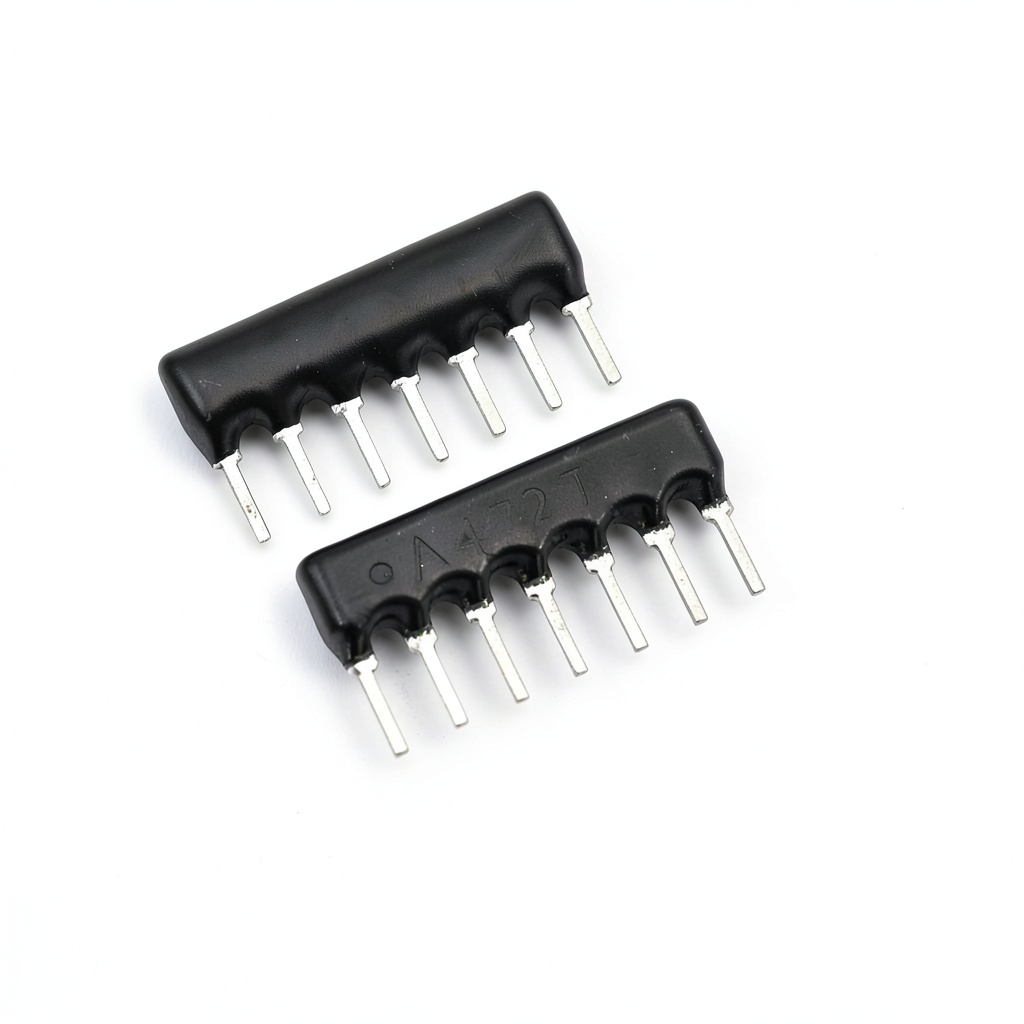
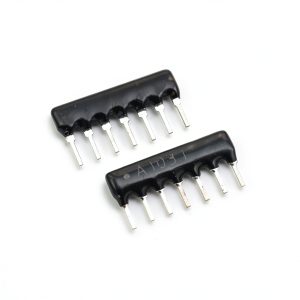
The 30‑piece 7‑pin resistor network array is engineered to deliver consistent 4.7 KΩ resistance across each unit. Manufactured by DIYMiFuns, the A472J model follows industry‑standard specifications for exclusion networks, providing a compact DIP footprint that fits seamlessly into breadboards, prototype boards, and production‑grade PCBs. Each resistor element is fabricated from a high‑temperature ceramic substrate with a thin film of metal‑oxide resistive material, ensuring stability over a wide temperature range and low noise performance. The array’s seven pins are arranged in a single‑row configuration, simplifying routing and reducing board space compared with discrete resistor placements. The uniform resistance across all seven pins also enables designers to replace multiple discrete resistors with a single part, reducing component count and simplifying bill of materials.
The design of the A472J network emphasizes both electrical precision and mechanical durability. Tolerance is tightly controlled at ±5 % of the nominal 4.7 KΩ value, and the resistors are rated for a continuous power dissipation of 0.125 W per element, making them suitable for low‑power logic circuits, voltage dividers, and pull‑up or pull‑down networks. The DIP package is made from a robust epoxy resin that protects the internal resistive film from moisture and mechanical stress, extending the usable life of the component in demanding environments. The epoxy resin also offers a high dielectric strength, allowing the component to withstand voltage spikes that may occur during power‑on transients.
From a manufacturing perspective, the 7‑pin resistor network offers significant assembly efficiency. The single‑row layout allows automated pick‑and‑place machines to handle the component with a standard 0.5 mm pitch, reducing cycle time and minimizing the risk of misalignment. The lead finish is tin‑plated, providing reliable solderability and a low‑resistance joint that meets IPC standards for solderability. The component’s markings, including the A472J designation, are laser‑etched onto the package for easy identification during testing and quality control. The standard 0.5 mm pitch aligns with most surface‑mount equipment, and the component can be oriented either way on the board without affecting performance, providing flexibility during layout.
In terms of electrical characteristics, the network exhibits a low temperature coefficient of resistance (TCR) of ±100 ppm/°C, which translates to minimal drift in precision applications. The isolation between pins is designed to exceed 1 MΩ, preventing unintended coupling and ensuring clean signal integrity in high‑frequency environments. The array also features a low parasitic capacitance, typically under 0.5 pF per pin, which is advantageous for timing circuits and filter implementations where capacitance could affect performance. The low leakage current between pins, typically below 1 nA, further enhances the suitability of the network for precision analog circuits where stray currents could introduce error.
The 30‑piece kit provides ample inventory for both development and production runs. Engineers can prototype multiple circuit variations without re‑ordering, while manufacturers can maintain a steady supply chain for volume production. The packaging includes anti‑static bags to protect the components from electrostatic discharge during shipping and handling, and the included datasheet outlines the full electrical parameters, recommended land pattern, and thermal ratings. The datasheet also provides recommended soldering profiles, including temperature ramp rates and peak temperatures, to help users achieve optimal solder joints without damaging the component.
Usage
The 7‑pin resistor network is ideally suited for a range of applications where space, reliability, and consistent resistance are critical. In hobbyist projects, the array simplifies the construction of voltage dividers, LED drivers, and sensor interfaces by consolidating multiple resistors into a single footprint. Its DIP form factor aligns with standard breadboard rows, allowing quick insertion and removal without the need for soldering during early prototyping stages. Because the array can be inserted directly into a breadboard, users can quickly test circuit variations and iterate designs without the need for solder rework, accelerating the development cycle.
For professional engineers, the A472J array serves as a building block in more complex designs such as digital logic families, microcontroller I/O protection, and communication interface termination. The exclusion network configuration helps prevent bus contention by providing defined pull‑up or pull‑down resistances, which is essential in I²C, SMBus, and other open‑collector or open‑drain systems. The predictable pull‑up resistance also aids in meeting the I²C bus specifications for rise time, ensuring reliable communication between master and slave devices even in noisy environments. The tight tolerance and low TCR ensure that timing margins remain stable across temperature variations, supporting reliable operation in industrial control panels and automotive electronics.
In educational settings, the resistor network offers a tangible example of how multiple resistors can be combined to achieve a desired equivalent resistance. Instructors can demonstrate concepts such as series‑parallel combinations, voltage division, and noise reduction using a single component, thereby reducing component count and simplifying inventory management for labs. Students can measure the actual resistance with a multimeter and compare it to the nominal value, gaining hands‑on experience with tolerance concepts and the impact of temperature on resistance.
The component also finds use in RF and high‑speed digital circuits where parasitic effects must be minimized. Because the network’s pins are closely spaced, the lead inductance is reduced, and the low inter‑pin capacitance helps maintain signal integrity at frequencies up to several hundred megahertz. When used in RF front‑ends, the minimized lead inductance reduces signal reflection, contributing to cleaner waveforms and better overall system performance. Designers of filter networks, oscillators, and impedance matching circuits can rely on the predictable behavior of the A472J to achieve precise filter characteristics without resorting to discrete resistor arrays.
When deployed in harsh environments, the epoxy‑encapsulated package protects the resistive film from humidity, vibration, and chemical exposure. This makes the array suitable for outdoor sensor nodes, industrial automation equipment, and aerospace subsystems where reliability is paramount. The component’s ability to operate from –55 °C to +125 °C further expands its applicability across a broad temperature envelope. The component’s ability to operate across a wide temperature range also makes it suitable for outdoor weather stations that must function reliably from sub‑zero winter mornings to hot summer afternoons.
Why Choose Us
Choosing DIYMiFuns for your resistor network needs means partnering with a manufacturer that prioritizes quality control at every stage of production. Each batch of A472J arrays undergoes a rigorous testing regimen that includes resistance verification, power rating assessment, and visual inspection under high magnification. This systematic approach guarantees that every part meets the declared specifications and reduces the likelihood of field failures. Our in‑process inspection includes automated optical inspection (AOI) and resistance measurement stations, providing traceability and confidence in each shipped unit.
Our commitment to customer support extends beyond the point of sale. We provide comprehensive technical documentation, including detailed datasheets, application notes, and recommended PCB layout guidelines. If you encounter design challenges, our engineering team is available to offer advice on optimal usage, thermal management, and integration strategies, ensuring that you can achieve the best possible performance from the component. We also maintain an online knowledge base where customers can download reference designs, simulation models, and firmware snippets that incorporate the resistor network.
Supply chain reliability is a core pillar of our service. The 30‑piece kit is stocked in multiple fulfillment centers, enabling rapid order processing and worldwide shipping. By maintaining a consistent inventory level, we minimize lead times and help you keep production schedules on track, even during periods of high demand or component shortages in the broader market. Our logistics network includes regional warehouses in North America, Europe, and Asia, ensuring that orders are fulfilled from the nearest location to reduce shipping time and cost.
Environmental responsibility is embedded in our manufacturing processes. The epoxy resin used for the DIP package is RoHS‑compliant, free from hazardous substances such as lead, mercury, and cadmium. Our packaging materials are recyclable, and we work with logistics partners that prioritize carbon‑efficient transportation methods. The recyclable packaging is made from biodegradable materials, and we continuously monitor our carbon footprint to identify opportunities for further reduction.
Finally, the value proposition of the 30‑piece A472J array is reinforced by its competitive pricing and the inclusion of value‑added accessories. Each shipment arrives with anti‑static protection, a concise quick‑start guide, and a QR‑code that links to an online repository of design resources. By choosing our product, you benefit from a single source for both the component and the supporting resources, streamlining procurement and technical support.
Key Features
- Compact DIP package saves board space and simplifies routing.
- Tight ±5 % tolerance and low temperature coefficient ensure stable performance.
- Robust epoxy encapsulation protects against moisture, vibration, and chemicals.
- Tin‑plated leads provide excellent solderability for automated assembly.
- Dedicated technical support and comprehensive documentation for hassle‑free integration.
FAQ
What is the power rating of each resistor in the A472J array?
Each resistor is rated for 0.125 W continuous power, which is suitable for low‑power logic and signal conditioning circuits.
Can the 7‑pin network be used in high‑frequency applications?
Yes, the low parasitic capacitance (under 0.5 pF per pin) and short lead length make the array appropriate for frequencies up to several hundred megahertz, though designers should evaluate system‑level impedance.
Is the component RoHS compliant?
The A472J resistor network is fully RoHS compliant, containing no lead, mercury, cadmium, or other restricted substances, making it safe for use in environmentally regulated products.
How many units are included in the package and how are they protected?
The kit contains 30 individual 7‑pin resistor network arrays, each sealed in an anti‑static bag to prevent electrostatic discharge during handling and shipping.
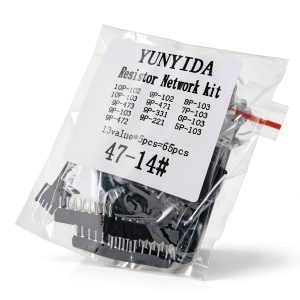 Generic 65pcs Resistor Network Kit 13 Values 5pcs Chip Array
  National Geographic Kids Illustrated Readers for Preschoolers
  National Geographic Kids Halloween Readers
  National Geographic Kids Readers: B01N9GVQJR
  Divination & Personal Growth Kindle eBook Spanish Edition 144 Pages
  BenBella Books Scientology and Poverty Study Kindle eBook 320‑Page PDF
 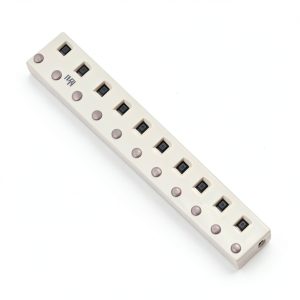 100pcs 0402 0 Ohm SMD Resistor 1% 1/16W by ProIcWorld ROHS
  Penguin Kindle Edition Tragedy Drama Play The Trojan Women 1973
  Greek Tragedy Kindle Edition Classic Play by Sophocles 60 Page Drama
  Bloomsbury Kindle eBook Enhanced Typesetting XRay Word Wise
  National Geographic Kids Animal Reader Ages 2-5 28‑Page Preschool Book
  Pink Dot Publishing Kindle Tragedy Drama Play 208‑Page British Irish
Reviews
There are no reviews yet.